
- Home
- Forging Blog
- Lightweighting the Future: Aluminum Forging Parts for Automotive and EVs
Lightweighting the Future: Aluminum Forging Parts for Automotive and EVs
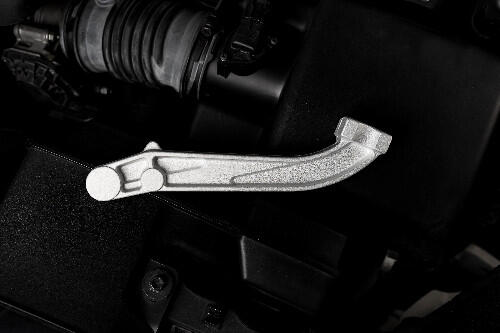
To meet these dual demands, engineers are increasingly turning to advanced manufacturing processes. By utilizing specialized aluminum automotive parts, manufacturers can significantly lower vehicle weight while maintaining the necessary mechanical strength.
Understanding the Aluminum Forging Process

To understand why a forged component performs differently under extreme stress, it is necessary to examine its fundamental manufacturing mechanics. Forging does not involve melting metal into a liquid. Instead, solid aluminum alloys are heated to a highly malleable, plastic state and forced into a custom steel die under extreme physical pressure. This compression creates a critical mechanical advantage known as continuous grain flow. As the metal is pressed, its internal grain structure physically aligns with the external contours of the part, producing a dense, continuous fibrous structure that maximizes overall structural integrity and strength.
Comparing Forging to Casting and Extrusion
When engineering structural automotive components, procurement teams typically evaluate three primary forming methods. Understanding their distinct mechanical limitations is critical for proper application:
- Aluminum Casting: This process involves pouring completely melted aluminum liquid into a mold. While casting is highly effective for mass-producing complex geometries, the liquid cooling phase inherently traps gas porosity. This resulting porosity fundamentally lowers the final component's overall structural density and mechanical strength.
- Aluminum Extrusion: This method forces heated aluminum through a shaped die to create continuous profiles with a fixed cross-section. While highly efficient for long, linear parts, extrusion is severely limited when designing complex, three-dimensional structures or components that require varying, localized stress reinforcements.
- Aluminum Forging: By combining extreme physical pressure with targeted die design, forging bridges the gap between three-dimensional structural freedom and uncompromised mechanical strength. This makes it the premier choice for components subjected to complex dynamic loads and high operational stress.
Structural Strength and Reliability Advantages
Because the forging process physically compresses the solid metal rather than melting it, the resulting components exhibit fundamentally superior mechanical properties. The highly dense, aligned grain structure practically eliminates internal porosity.
Consequently, forged aluminum parts consistently deliver significantly higher tensile strength and exceptional impact toughness compared to cast or extruded alternatives, ensuring ultimate reliability under severe, repetitive loading conditions.
Operational Advantages in Vehicle Engineering

Integrating forged components into a vehicle's architecture provides several distinct functional benefits that directly improve performance.
High Strength-to-Weight Ratio
Forged aluminum provides the structural rigidity of heavier steel parts at a fraction of the weight, allowing engineers to achieve genuine lightweighting targets without compromising safety crash test ratings.
Fatigue and Impact Resistance
Automotive components are subjected to constant vibration and sudden impacts from uneven road surfaces. The dense, aligned grain structure of a forged part absorbs and disperses this dynamic energy, preventing sudden catastrophic failure.
Dimensional Precision
Modern near-net shape forging techniques allow manufacturers to press aluminum very close to its final required dimensions. This capability supports the creation of complex, specialized geometries that fit precisely into tight automotive assemblies.
Thermal Dissipation
Aluminum possesses excellent natural thermal conductivity. In high-performance applications, forged aluminum effectively draws heat away from critical areas, maintaining safe operating temperatures for surrounding systems.
Core Applications for Automotive Components
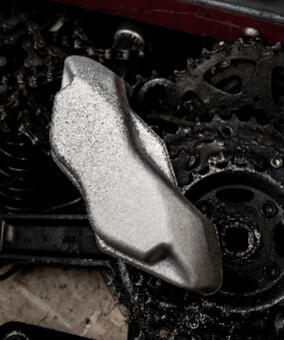
The mechanical properties of forged aluminum make it suitable for various high-stress areas within a vehicle.
Chassis and Suspension Systems
The suspension system connects the vehicle body to the wheels. Parts like control arms, steering knuckles, and suspension brackets must endure constant road impact and heavy load transfers during cornering. Using forged aluminum for these components improves fatigue strength while significantly reducing unsprung weight—the physical mass located below the vehicle's suspension springs. Lowering this specific weight directly improves the vehicle's handling responsiveness and tire traction.
Drivetrain and Power Systems
Components that transfer power from the engine to the wheels, such as connecting rods and drive shaft yokes, operate under high rotational speeds and severe torque. Forged parts maintain their structural stability under these extremes while lowering rotational inertia, which improves overall power transmission efficiency.
Braking Systems
Brake calipers grip the brake rotors to stop the vehicle, generating massive amounts of friction and heat. Forged aluminum calipers provide the structural rigidity necessary to maintain even braking pressure without warping, while their thermal conductivity helps dissipate the intense heat quickly.
Dedicated Aluminum Electric Vehicle Parts
The shift to electric mobility requires specialized structural components. Battery module brackets and motor support mounts must secure heavy battery packs and high-torque motors while absorbing road vibrations. Forged aluminum electric vehicle parts deliver the necessary structural rigidity to protect volatile battery cells while keeping the vehicle's overall weight low to maximize electrical driving range.
Auxiliary Components
Smaller fluid management systems also benefit from the forging process. Parts like oil filter wrenches, air-conditioning pipes, and coolant connectors require high-pressure resistance and leak-proof stability. Forged aluminum provides a consistent, non-porous structure that prevents pressurized fluids or refrigerant gases from escaping.
Sustainability and Green Manufacturing
Beyond physical performance, modern procurement teams must rigorously evaluate the environmental impact of their supply chains. Aluminum forging aligns strongly with global Environmental, Social, and Governance (ESG) manufacturing targets, transitioning production from a traditional cost center into a strategic advantage for low-carbon compliance.
Maximizing Material Efficiency and the Circular Economy
The core environmental advantage of the forging process is its exceptional material utilization. Utilizing near-net shape technology, raw aluminum is precisely pressed into its final form, consistently achieving utilization rates between 80% and 90%. In contrast, subtractive computer numerical control (CNC) machining often destroys 50% to 80% of a solid starting block.
Energy-Optimized Processing and Green Aluminum
Thermal efficiency is another critical differentiator. Unlike metal casting, which consumes massive amounts of energy to turn solid metal entirely into liquid, forging only requires heating the aluminum into a malleable, plastic state. Modern forging facilities compound this lower baseline energy requirement by actively installing energy-efficient heating furnaces, waste-heat recovery systems, and renewable energy infrastructure.
Regulatory Compliance and EV Range Optimization
Global automotive manufacturers are facing increasingly strict environmental legislation, including the European Union’s Carbon Border Adjustment Mechanism (CBAM), the US Corporate Average Fuel Economy (CAFE) standards, and various international carbon taxes. Aluminum forging directly addresses these regulatory pressures by enabling massive vehicle weight reductions.
For electric vehicles (EVs), lightweighting is a direct catalyst for performance. Engineering data shows that reducing a vehicle's weight by 100 kilograms can improve its electrical driving range by 6% to 11%. Utilizing forged aluminum for critical chassis, suspension, and motor support brackets allows engineers to shed this excess weight to meet emission and range targets without ever sacrificing passenger safety or structural strength.
Smart Manufacturing and Digital Optimization
The push for green manufacturing is heavily supported by modern digital integration. Forward-thinking forging facilities deploy Industrial Internet of Things (IoT) sensors, artificial intelligence monitoring, and digital twin technology to create a smart manufacturing ecosystem. This infrastructure allows operators to optimize processing parameters in real time. By immediately detecting and correcting deviations in die pressure or furnace temperature, facilities maximize their production yield while simultaneously preventing unnecessary energy waste and scrap generation.
Conclusion
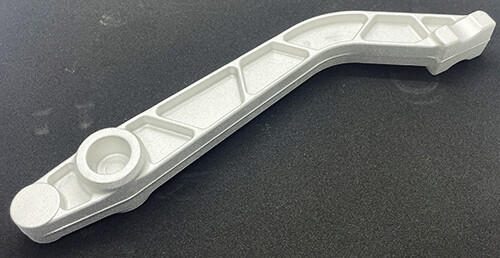
As the automotive industry transitions toward electric mobility and stricter efficiency standards, vehicle design must balance performance, passenger safety, and environmental sustainability. Choosing a manufacturing partner capable of executing this precise process is essential for maintaining a reliable supply chain. Yi-Chen Industrial specializes in the development and mass production of high-strength forged components for the global transportation sector.

Based in Taiwan, Yi- Chen Industrial is a professional manufacturer of forged aluminum automotive parts. To discuss your engineering requirements and see how our forging processes can support your vehicle lightweighting goals, please contact our team directly.